Dwarf Sunflowers vs Nasturtiums for a Sunny Balcony Screen
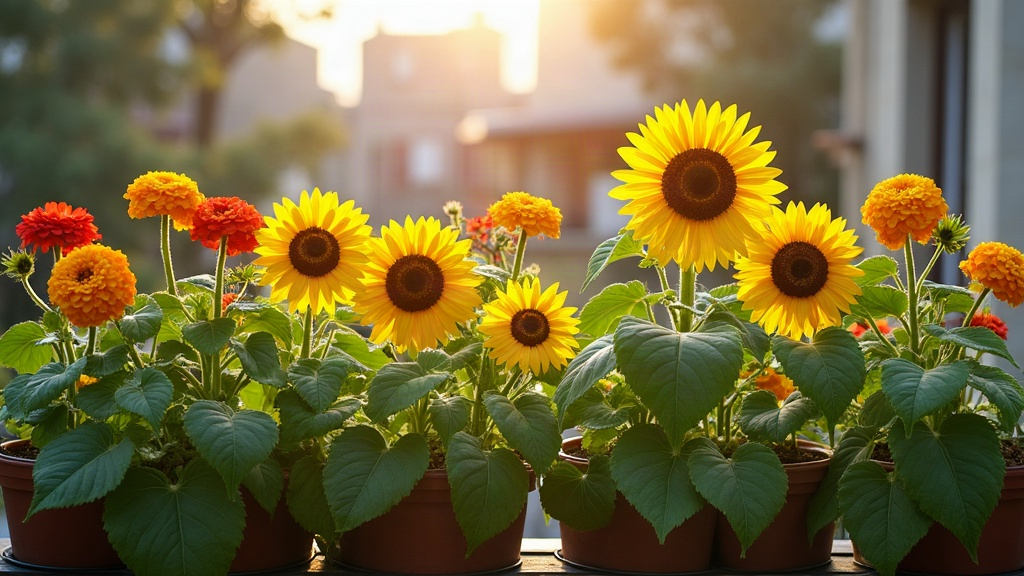
If you’re torn between dwarf sunflowers and nasturtiums for a living screen on a sunny balcony, here’s the quick version: dwarf sunflowers get you fast vertical height and a bold visual block, while nasturtiums give you a lush, trailing curtain of color that’s easier to manage in a tight footprint and, as a bonus, you can eat it. Which one wins really comes down to three questions. How much height do you actually need? How much fussing are you willing to do? And would you like your privacy screen to double as dinner?
Why These Two Plants Compete for the Same Spot
Dwarf sunflowers (think Helianthus annuus varieties like ‘Sunspot’ or ‘Elf’) and nasturtiums (Tropaeolum majus) both love full sun, shrug off mediocre soil, and shoot up fast from seed. No wonder renters and apartment dwellers gravitate toward them. Nobody wants to wait three years for a hedge to fill in, and trellised vines aren’t cheap.
Still, the two plants tackle “privacy” from completely different angles.
Dwarf Sunflowers: Vertical, Structural, Bold
Most dwarf sunflower varieties land somewhere between 16 and 30 inches tall. ‘Suntastic Yellow,’ for instance, tops out around 20 inches in a pot. They stand upright on thick, sturdy stems and pump out large, cheerful blooms that are hard to miss.
Pros:
- Strong vertical presence, good for blocking sightlines right at railing height
- Big, showy blooms visible from across the street, not just up close
- Draws pollinators and finches (the seed heads make a nice snack for birds later)
- Sturdy stems hold up in wind far better than a delicate vine would
Cons:
- Need deep pots, at least 12-14 inches, because they send down a real taproot
- Bloom window is short, usually 4-6 weeks per flush, unless you stagger plantings every couple of weeks
- Heavy flower heads can topple a pot when gusts pick up on an exposed balcony
- Once the flush is done, the plant looks ragged fast and basically needs pulling
Best for: balconies that need one solid, eye-level break, say, blocking a direct sightline from the building next door, and for gardeners who’d rather have a showstopper bloom than nonstop coverage.
Nasturtiums: Trailing, Dense, Edible
Nasturtiums come in two basic forms: compact mounding types (12-15 inches) and trailing or climbing types that can sprawl 3 to 8 feet along a rail or trellis. ‘Empress of India’ and ‘Alaska’ are two favorites, prized for dense foliage and a bloom season that just keeps going.
Pros:
- Blooms nonstop from early summer right up to the first frost
- Trailing varieties spill over a railing like a curtain, great for softening a hard balcony edge
- Leaves, flowers, even the seed pods are edible, with a peppery bite somewhere between arugula and watercress
- Shallow roots mean they’re happy in window boxes as shallow as 6-8 inches
- Self-seed readily, so don’t be surprised if volunteers pop up again next spring
Cons:
- Individual flowers are smaller and less dramatic than a sunflower head
- Aphids love them (some gardeners actually plant nasturtiums on purpose as a “trap crop” to pull aphids away from other plants)
- Trailing types can’t stand on their own, they need something to drape over
Best for: balconies where continuous color matters more than one big dramatic moment, or for anyone who likes the idea of tossing homegrown flowers into a salad.
Side-by-Side Comparison
| Factor | Dwarf Sunflowers | Nasturtiums |
|---|---|---|
| Height | 16-30 in (upright) | 12 in (mound) or 3-8 ft (trailing) |
| Bloom duration | 4-6 weeks per flush | Continuous, all season |
| Container depth needed | 12-14 in | 6-8 in |
| Wind resistance | Moderate (top-heavy) | High (low profile) |
| Edible | Seeds only (some varieties) | Leaves, flowers, pods |
| Maintenance | Deadhead, stake if needed | Pinch back, watch for aphids |
| Screening style | Vertical block | Draping curtain |
Can You Grow Both Together?
Actually, yes, and it works better than you’d expect. Tuck the dwarf sunflowers toward the back or center of a large planter for height and structure, then let nasturtiums trail off the front edge, or hang them below in a separate rail box. The sunflowers do the heavy lifting on height while the nasturtiums fill the gaps and soften the base. The result reads like layered privacy rather than one flat wall of green.
Quick Decision Guide
- Need maximum height fast, plus a bold focal bloom? Go with dwarf sunflowers.
- Want season-long coverage in a shallow container? Nasturtiums.
- Want something you can actually harvest for the kitchen? Nasturtiums.
- Balcony gets hit with strong wind? Lean nasturtiums, or stake your sunflowers well.
- Prefer low-maintenance color that reseeds itself year after year? Nasturtiums, hands down.
Conclusion
Neither plant beats the other outright, they’re just built for different jobs. Dwarf sunflowers hand you height and drama in a short burst, while nasturtiums grind out dense, tough, edible coverage all season. For most sunny balconies where real privacy and good looks both matter, mixing the two in one layered planting gets you structure and fullness at the same time, without giving up bloom time or making more work for yourself.