Dwarf Snap Peas in Narrow Railing Planters: Early Spring Harvest
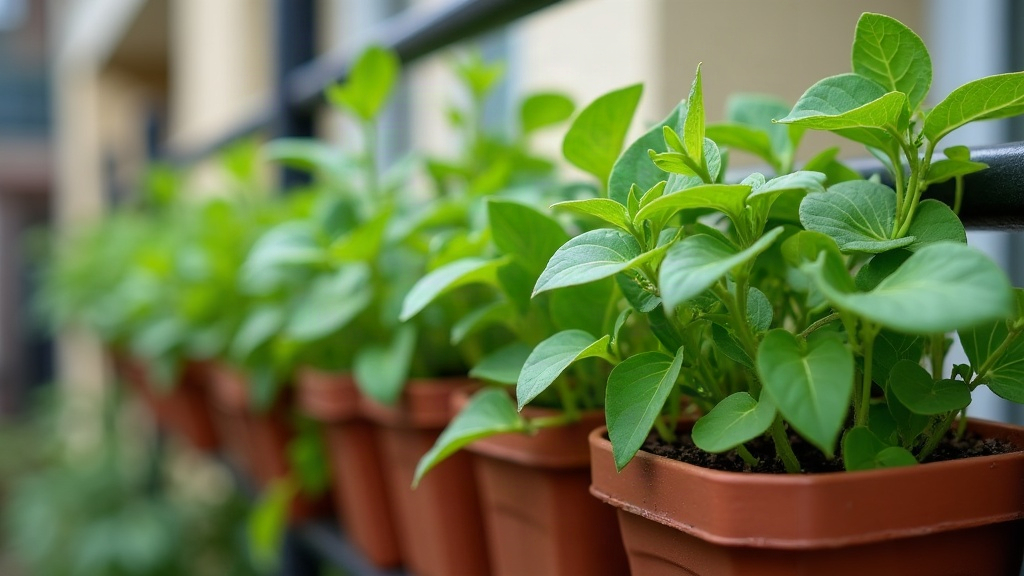
If your balcony railing is on the skinny side and you’ve been eyeing homegrown vegetables anyway, dwarf snap peas might be the easiest win you’ll get all season. Tall vining peas want deep soil and a proper trellis. Dwarf types don’t ask for much: a shallow planter, a little support, and about 50-60 days before you’re pulling off sweet, crunchy pods. Chances are good you’ll be harvesting before your neighbor has even bothered to plant tomatoes.
Why Dwarf Snap Peas Work So Well in Railing Planters
Most railing planters run 6-8 inches deep and 5-8 inches wide. That’s a dealbreaker for a lot of vining vegetables, but not for dwarf peas, and here’s why:
- Their roots are shallow and fibrous rather than one deep taproot, so they’re fine in a shallow box
- Plants top out around 18-24 inches, light enough that they won’t tip a flimsy planter
- They shrug off cool spring weather, even a light frost, so you get a harvest weeks ahead of anything heat-loving
- They weigh next to nothing, which matters if your railing has a posted weight limit
Best Dwarf Varieties for Narrow Containers
Not every snap pea behaves well in a pot. Stick to cultivars bred for compact growth:
- Sugar Ann - one of the fastest to produce, around 52 days, vines rarely climb past 24 inches
- Little SnapPea Crunch - built specifically for patios and containers, stays near 18 inches
- Patio Pride - a true bush type, barely needs a trellis at all
- Sugar Daddy - a bit taller at 30 inches, but still workable with a small trellis
Steer clear of the tall heirlooms, Sugar Snap and Mammoth Melting Sugar among them. They want 5-6 feet of vertical room and will happily tip over a narrow box the moment the wind picks up.
Choosing and Prepping the Planter
Narrow space means drainage and soil volume carry more weight than they would in a garden bed:
- Depth: 8 inches minimum. Anything shallower dries out fast and the plants just sulk.
- Drainage holes: non-negotiable. Peas rot in soggy soil within days.
- Mounting: get hook-and-bracket hardware rated for the full, wet weight. An 8-inch planter packed with damp soil can hit 15-20 lbs per linear foot, more than people expect.
- Soil mix: go light, use a well-draining potting mix with compost folded in. Skip heavy garden soil; it compacts fast in a narrow container.
Timing for an Early Spring Harvest
Peas are a cool-season crop through and through, and railing planters actually have an edge here: they warm up quicker than ground soil, so you can jump the gun a little.
- Direct sow the moment the soil is workable, roughly 3-4 weeks before your last frost.
- Germination starts at a soil temperature of around 45°F (7°C), though 60-70°F gets things moving faster.
- In milder zones (7-9), you can even sow in autumn for an extra-early spring crop. The seedlings overwinter small and take off again once the days stretch out.
- Sow a fresh batch every 10-14 days for about a month. That way you get a steady trickle of pods instead of one big harvest and then nothing.
Trellising in Tight Spaces
Even the dwarf types do better with a little support, mostly to keep pods off the soil and let air move through the leaves:
- A twig or willow-branch teepee does the job and looks genuinely nice on a balcony
- Plastic or metal garden netting, 18-24 inches tall, zip-tied straight to the railing
- Bamboo stakes in the corners of the planter with twine run between them
Don’t bother with anything heavy or freestanding. The whole appeal of dwarf peas is skipping that kind of setup.
Watering and Feeding
Narrow planters dry out faster than you’d think, so plan accordingly:
- Once it’s regularly above 60°F, check the soil every day
- Water until it drains from the bottom, then wait for the top inch to dry before doing it again
- Peas make their own nitrogen, so don’t reach for a high-nitrogen fertilizer. You’ll get a jungle of leaves and barely any pods.
- One light dose of balanced liquid fertilizer right at flowering is plenty
Harvesting for Best Flavor
Pods are ready when they’re plump but still glossy and bright green, usually 7-10 days after the flowers open. Once pods start showing up, check every couple of days; leave them too long and they turn starchy and tough. Pick in the morning for the best crunch, and keep picking often. The more you harvest, the more the plant keeps producing.
Final Thoughts
Dwarf snap peas seem built for narrow railing planters: shallow roots, next to no weight, happy in cool weather, and quick to the table. Pick a compact variety like Sugar Ann or Little SnapPea Crunch, give them at least 8 inches of well-draining soil, add a light trellis, and get seeds in the ground as early as your climate allows. Give it two months and you’ll be standing on your balcony, pulling crisp pods right off the vine. Hard to beat that as a first harvest of the year.