Fixing Leggy Strawberry Plants in Hanging Baskets
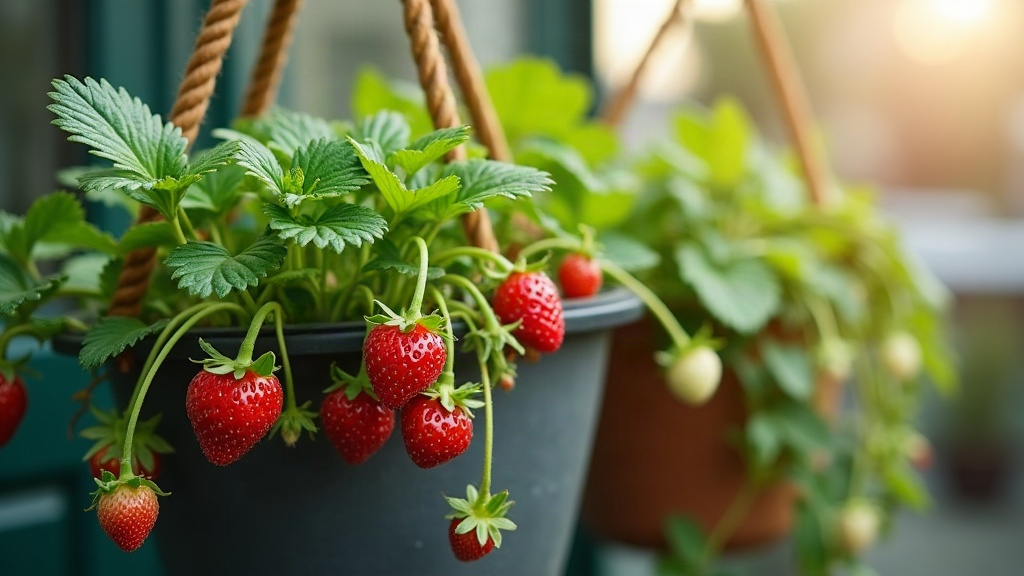
Fixing Leggy Strawberry Plants in Hanging Baskets
If your hanging basket strawberries look like a mess of bare, wiry stems with a tuft of leaves only at the very tips, you’ve got what gardeners call “legginess.” It’s a stretched, weak growth pattern, and it almost always traces back to two things: not enough light, and runners that nobody bothered to cut back. The fix isn’t complicated. Move the basket somewhere brighter, trim the stretched-out stems, and prune runners so the plant puts its energy into tight, fruit-producing crowns rather than endless trailing vines.
Why Strawberry Plants Get Leggy in Hanging Baskets
Hanging baskets look great on a porch, but let’s be honest, they’re nothing like a strawberry’s natural growing conditions. A strawberry plant in the ground spreads low and wide, soaking up light from every angle. Suspend that same plant in a basket three feet off the ground, and suddenly it’s fighting for light, water, and root space in a container the size of a mixing bowl.
Insufficient Light Is the #1 Cause
Strawberries want 6 to 8 hours of direct sun a day to stay compact and keep producing fruit. Hang a basket under a porch roof, beneath a maple tree, or on a north wall, and the plant has no choice but to stretch toward whatever scraps of light reach it. That stretching has a name: etiolation. You’ll recognize it by:
- Long, thin stems with wide gaps between leaves
- Pale green or yellowish foliage, instead of rich dark green
- Weak crowns that buckle under the weight of fruit
- Fewer flowers, and the berries that do form stay small
Unchecked Runners Drain Energy
Strawberries naturally throw out runners (stolons), those long horizontal shoots that try to root and start a new plant somewhere else. In a hanging basket, there’s nowhere for them to go. They just dangle over the rim, looking stringy, while quietly stealing water and nutrients from the mother plant. Left unchecked for a whole season, a single basket can end up with a dozen runners, none of them doing anything useful except making the plant look sparse and the crown weaker by the week.
Step 1: Fix the Light Problem
Don’t reach for the pruning shears yet. Deal with the light first, or you’ll just be trimming symptoms.
Relocate the Basket
Find a spot that gets morning sun plus at least some afternoon exposure, ideally south- or west-facing, with 6+ hours of light total. No full-sun spot available? Pick the brightest corner you’ve got, and if the plant lives indoors or on a shaded balcony, add a grow light for 4 to 6 hours a day. A $20 clip-on LED grow light has saved more than a few leggy baskets.
Rotate the Basket Weekly
Even a basket in decent light can grow lopsided. Give it a quarter turn every 4 to 7 days so every side gets its turn facing the sun. Skip this and you’ll end up with all the growth leaning one direction, like a plant straining toward a window.
Watch for Secondary Light Blockers
Here’s something people miss: a neighbor’s tree leafing out in May, a new fence going up next door, or an awning installed mid-summer can quietly cut your light by half without you ever noticing the change. Check your sun exposure every few weeks through the growing season, not just once in spring.
Step 2: Prune Runners Strategically
Light sorted? Good. Now go after the runners.
How to Identify Runners vs. Crowns
- Runners: thin, leafless stems shooting outward, often with a tiny plantlet dangling at the end
- Crowns: the thick, central base of the plant, where the leaves and flowers actually emerge
When to Cut Runners
- Want maximum berries? Snip runners the moment you spot them, right at the base, with clean scissors or a pair of pruning snips. Don’t wait, they grow fast.
- Want to propagate new plants instead? Let 2 or 3 runners form plantlets, then cut the connecting stem once that baby plant has grown 3 to 4 leaves and a small root system of its own.
Rule of Thumb
If the basket’s job is to produce fruit, remove about 90% of runners and leave only a couple as backup plants, if you even want those. Honestly, this one habit does more for a full, bushy basket than anything else on this list.
Step 3: Reshape the Existing Growth
- Trim leggy stems: Cut the long, bare stems back to roughly 2 inches above the crown. The regrowth comes in denser and much closer to the base.
- Remove dead or yellowing leaves: This frees up energy for new growth and improves airflow, which cuts down on disease.
- Pinch early flowers (for the first 2-3 weeks after you reset the light and prune): Let the plant rebuild its structure first. Fruit can wait a few weeks.
Ongoing Maintenance for Fuller Baskets
- Feed every 2 weeks during active growth with a balanced liquid fertilizer (10-10-10 works fine, or a berry-specific blend if you want to be fancy about it).
- Water consistently. Hanging baskets dry out far faster than garden beds, sometimes in a single hot afternoon, and drought stress only makes legginess worse.
- Top-dress with fresh compost each spring to put nutrients back into soil that’s been worked hard for a full season.
Conclusion
Nine times out of ten, a leggy strawberry basket comes down to one combination: too little light, too many runners. Move the basket somewhere brighter, turn it weekly, and be ruthless with runner pruning unless you’re actively trying to propagate new plants. Pair that with a stem trim and steady feeding, and most baskets bounce back in 3 to 4 weeks, filling out with tight, fruitful growth instead of those long bare stems you started with.