How to Hand-Pollinate Patio Tomatoes on a Screened Balcony
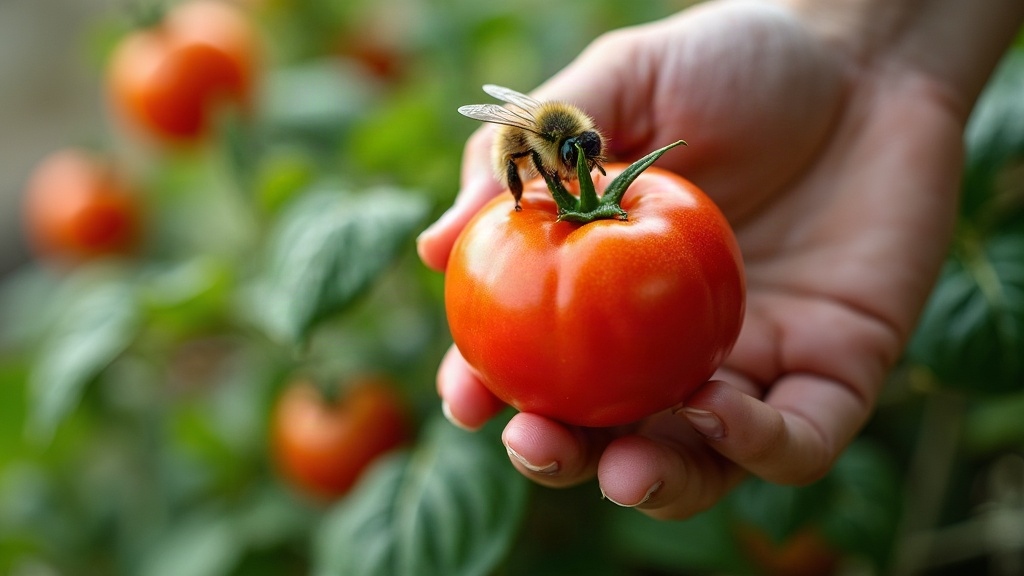
Growing tomatoes on a screened balcony or enclosed patio? You’ve probably noticed the plant is covered in flowers, yet the fruit count stays stubbornly low. The screen that keeps mosquitoes off your ankles also keeps out bees, and without a pollinator visiting, tomato flowers just sit there doing nothing. Here’s the good part: tomatoes don’t actually need bees. They’re self-fertile. Spend a few minutes every couple of days hand-pollinating, and you can match (sometimes beat) what an open-garden plant produces, because you’re the one deciding exactly when and how pollination happens.
Why Screened Balconies Block Natural Pollination
Tomato flowers are “perfect” flowers, meaning each bloom carries both male parts (the stamen) and female parts (the pistil) in one package. Outdoors, wind and the vibration of a passing bumblebee shake pollen loose from the anthers so it drops onto the stigma below. That shaking action has a name: buzz pollination. Bumblebees are the undisputed champions of it, better than honeybees by a wide margin.
A screen changes two things at once:
- No insect access. Screens exist specifically to stop bees, flies, and anything else with wings from getting in.
- Dead air. Even the small breezes that would normally nudge a flower open-air get filtered out, so pollen just sits there, undisturbed, going nowhere.
The result is predictable: flowers open, look perfectly healthy, then turn yellow and drop off without ever becoming a tomato. If you’ve got a patio full of blossoms and barely a handful of fruit, this is almost certainly why.
How to Tell a Flower Is Ready to Pollinate
Look for blooms that are:
- Fully open, with the petals curled back away from the center
- Bright yellow, not pale, not shriveled
- Freshly opened, within the last day or two, since that’s when pollen is at its most viable
Timing matters more than people expect. Morning, roughly 9 a.m. to noon, is the sweet spot: humidity is moderate, pollen is dry enough to move around, and the afternoon heat hasn’t degraded it yet.
Three Reliable Hand-Pollination Methods
1. The Electric Toothbrush Method
Oddly enough, this one comes closest to replicating an actual bumblebee buzz.
- Turn on an electric toothbrush. No toothpaste, obviously.
- Touch the vibrating head to the stem just behind the flower cluster for 1-2 seconds.
- Watch closely and you’ll often see a tiny puff of pollen drift out, almost like a little cloud.
- Repeat on every open cluster every 2-3 days.
2. The Cotton Swab or Small Paintbrush Method
Better suited to smaller plants, or if you’d rather have more precision.
- Gently insert a cotton swab or a soft artisan brush into the center of the flower.
- Swirl it lightly against the anther cone to pick up pollen.
- Move to the next bloom and repeat, carrying pollen from flower to flower as you go.
- You can reuse the same swab across several flowers on the same plant, which encourages cross-pollination within the variety.
3. The Gentle Shake Method
No tools required, just your hand.
- Hold the main stem just below a flower cluster.
- Flick it with a finger, firmly, or shake the whole cluster gently for a few seconds.
- Hit every cluster you can find. Pair this with a small fan running nearby to simulate real airflow.
Boosting Your Success Rate
- Run a small oscillating fan near your tomatoes for 10-15 minutes a day. It loosens pollen between your hand-pollination sessions and, as a bonus, helps build sturdier flower stems.
- Keep humidity in a reasonable range. Pollen that’s bone-dry won’t transfer well, and neither will pollen that’s turned sticky from humidity above 70%. A light misting of the surrounding air (never spray the flowers directly) helps in dry spells.
- Watch out for temperature swings. Above 90°F (32°C) or below 55°F (13°C), pollen viability drops fast no matter what technique you’re using. If a heat wave hits while flowers are open, give those blooms extra attention once temperatures settle back down.
- Don’t skip clusters. Every single flower you miss is a tomato you won’t get. It only takes a few extra seconds to cover them all.
What Success Looks Like
Give it 3-5 days after a good pollination session and you should spot a small green swelling right at the base of the flower, the very first sign of a fruit forming, while the petals wither and fall away on their own. If instead the whole flower drops with no swelling underneath, that’s your signal to pollinate more often and make sure you’re catching flowers at the right moment (freshly opened, not already fading toward yellow-brown).
Conclusion
A screened balcony doesn’t have to end in a pollinator-free harvest. Tomatoes were built to self-pollinate, and an electric toothbrush, a cotton swab, or just your own fingers can do a bee’s job just as well. Fold hand-pollination into your morning routine every 2-3 days while the plant is flowering, add a bit of airflow from a fan, and those pretty but fruitless blossoms will start turning into a steady pile of homegrown tomatoes, screen included.