How to Grow Dwarf Pomegranate Trees in Containers on a Hot Rooftop
Why Dwarf Pomegranates Are Perfect for Rooftops
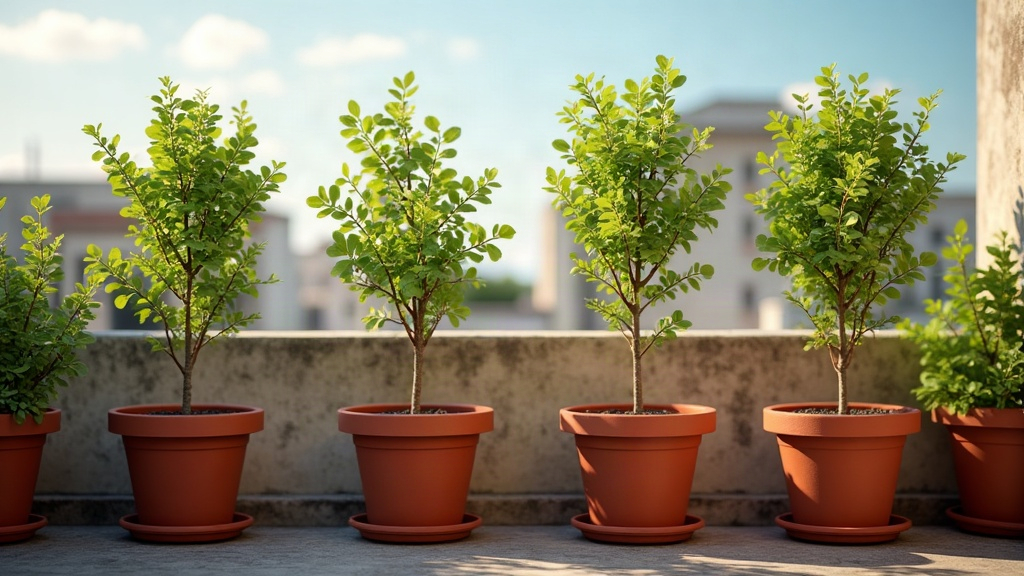
Most fruit trees wilt the moment reflective heat hits them. Pomegranates don’t. They come from semi-arid stretches of the Mediterranean and Central Asia, so a rooftop actually feels like home to them: blasting sun, wind, and that radiant heat bouncing off concrete or asphalt. Dwarf cultivars (Punica granatum ‘Nana’ and its relatives) stay compact, usually 2 to 4 feet tall, so they fit comfortably in pots. And despite their small size, they still push out fragrant orange-red flowers and small fruit that’s ornamental at minimum, edible at best.
Choosing the Right Container
Heat is the number one obstacle up there, and the wrong pot turns into a literal oven around the roots.
- Material: Skip thin black plastic. It soaks up heat like a skillet and can cook the roots inside. Go with glazed ceramic, light-colored fiberglass, or a double-walled resin pot instead.
- Size: Start at 12-16 inches in diameter, then move up to 20-24 inches once the tree fills out. More soil mass means the temperature swings less dramatically hour to hour.
- Drainage: Non-negotiable, multiple large holes at the base. Set the pot on feet or bricks so air moves underneath, especially on those sticky, humid afternoons.
- Color: Light or white containers throw heat back rather than soaking it in, which matters a lot when sunlight is reflecting off every surface around you.
Best Soil Mix for Rooftop Containers
Pomegranates want sharp drainage, but rooftop air dries things out so fast that a little moisture retention still helps.
- 40% high-quality potting mix
- 30% coarse perlite or pumice (drainage, keeps things from compacting)
- 20% compost or well-rotted manure (feeds the tree)
- 10% coarse sand (echoes the gritty native soil these trees grew up in)
This blend drains fast after a good soak but won’t turn to dust within a few hours, and on a windy, sun-baked roof, that difference matters more than you’d think.
Watering Strategy for Extreme Heat
Pots up here dry out two to three times faster than anything planted in the ground. A few rules worth sticking to:
- Check daily during summer. Push a finger about 2 inches down into the soil before deciding.
- Water deeply, not often. Soak until water runs out the bottom, then wait for the top inch to dry before doing it again.
- Water in the morning. That gives roots time to draw up moisture before the afternoon heat really hits.
- Mulch the top with gravel or bark. It slows evaporation and bounces some heat away from the root zone.
Skimp on water during a heat spell and you’ll likely see fruit drop. Overdo it in soil that doesn’t drain well and root rot follows. There’s a narrow window here, and it’s worth paying attention to.
Managing Rooftop Heat and Sun Exposure
- Full sun is fine, generally. But if your roof regularly climbs past 100°F (38°C), throw up a 30% density shade cloth for the afternoon hours during the worst weeks.
- Cluster your pots or tuck them near a low wall. That alone creates a small microclimate with less wind and less bounced heat.
- Protect the root zone. During a real heat wave, wrap the pot in something reflective or insulating, bubble wrap under a layer of fabric works fine, to keep root temperatures from spiking.
Wind Protection
Wind up on a roof is a different beast than at street level. It stresses branches and pulls moisture out of soil faster than you’d expect.
- Stake young trees loosely through their first year.
- Set up a windbreak on the side the wind usually comes from: a trellis, a lattice panel, or even a row of taller potted plants will do the job.
Feeding and Fruiting
- Feed with a balanced slow-release fertilizer (10-10-10) in early spring. Then switch to something higher in phosphorus and potassium come early summer to push blooming and fruit set.
- If fruit set looks thin, grab a small brush and hand-pollinate the flowers yourself. Rooftop wind tends to keep bees away more than you’d think.
- Prune lightly after fruiting, just enough to keep the shape clean and clear out dead wood. Dwarf varieties really don’t need much cutting back.
Winter Care on Rooftops
Even in a warm climate, an exposed rooftop pot can swing surprisingly cold at night.
- Once temperatures drop below 20°F (-6°C), move the pot somewhere sheltered or wrap the container itself in insulation.
- Cut back on watering in winter; the tree slows down and goes semi-dormant.
Common Problems and Fixes
- Yellowing leaves: Usually overwatering or bad drainage. Check the roots.
- Fruit splitting: Comes from uneven watering. Keep moisture levels steady, not feast-or-famine.
- Leaf scorch: Put up afternoon shade cloth during heat waves.
- Few fruits: Hand-pollinate, and check that your feeding schedule has enough phosphorus and potassium in it.
Conclusion
Dwarf pomegranates handle hot rooftops better than almost any other fruiting plant you could try, but it really comes down to three things: a container that drains well and doesn’t turn into an oven, a watering routine you actually stick to, and smart use of shade and windbreaks when the heat peaks. Get those right, and you’ll end up with glossy leaves, bright blooms, and a reliable little harvest of pomegranates, no backyard required, just a roof and a bit of attention.